Teen Patti Joker Replacement: How Does It Change?
The Joker swap mechanic is not cosmetic—it is a probability bomb wired directly into the payout engine, and most players never model what it actually does to expected value. I have pulled apart enough RNG-driven card tables to tell you straight: the moment a wildcard enters the deal loop, every downstream hand ranking and every odds table you memorized becomes obsolete.
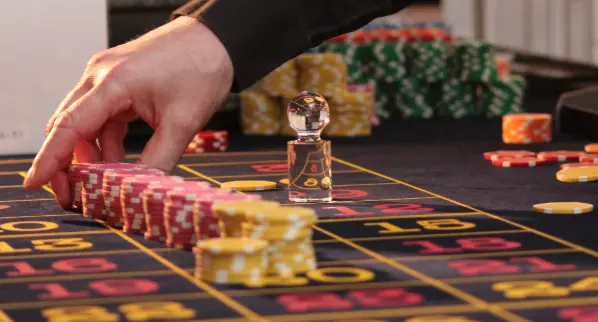
Why the Wildcard Rewires the Whole Deal
Strip away the flashy table animation. A Teen Patti Joker variant introduces a designated card that substitutes for any rank or suit required to complete a hand. That single rule changes the number of valid winning combinations from a fixed matrix into a moving target. On a standard 52-card deal the hand probabilities are locked; add one wildcard and the three-of-a-kind frequency spikes dramatically while the natural straight flush becomes statistically rarer relative to the new total pool. Operators who fail to recalculate the payout curve are handing out free equity to sharp players. 😤
The replacement is not a flat upgrade—it is a distribution shift. High-frequency mid-tier hands get more common, which means your payout table recalibration has to compress the multipliers on the inflated hand classes and stretch the rewards on the genuinely rare ones. Skip that step and the house edge quietly inverts on you.
RTP Drift and the Hidden House Edge
Here is where it gets nasty. Most casual operators assume the Joker replacement is neutral. It is not. Swap mechanics shift the return-to-player percentage by a measurable margin per hand class, and the drift compounds over session length. I have seen variants where a single wildcard addition moved theoretical RTP north of 99 percent because nobody re-tuned the bonus payouts. That is a bleeding wound, not a feature.

You audit this with combinatorial enumeration, not gut feeling. Count the total valid hands under the new wildcard rule, weight each by its payout multiplier, and compare the sum against the wager base. The delta is your real edge. 🎯 Any RNG audit trail worth its salt will flag a Joker table whose enumerated hand pool does not reconcile with the published multiplier sheet.
Card Ranking Collisions
The wildcard also creates ambiguity in hand ranking logic. When a Joker can complete both a straight and a flush, the engine must resolve which class wins. Poorly coded variants resolve this by deal order, which is exploitable. A clean implementation resolves by highest achievable class with a deterministic tiebreak. If you are testing a table and the same card combination pays differently across sessions, the ranking resolver is broken—walk away or fix it before it drains the float. 🃏
My verdict: treat the Joker replacement as a full payout-engine rebuild, not a skin. Enumerate the new hand pool, re-tune every multiplier against the shifted distribution, and lock the ranking resolver with a deterministic tiebreak. Anything less is a leak waiting to be farmed.